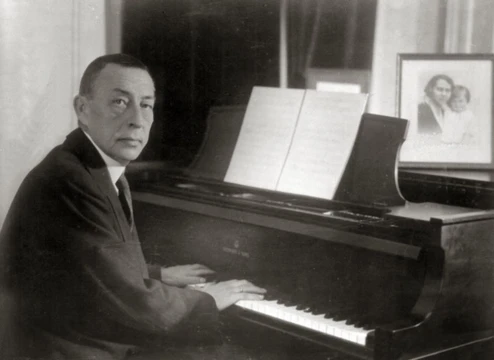
Lauritz Melchior
Danish-American heldentenor, quintessential Wagnerian voice of his era.

He was the preeminent Wagnerian heldentenor of the 1920s through the 1940s and has come to be considered the quintessence of his voice type. Late in his career, Melchior appeared in movie musicals and on radio and television, and he made numerous recordings.
- field
- Opera singer (heldentenor)
Reader's Guide
Lauritz Melchior's significance lies in his status as the defining Wagnerian heldentenor of his time, a voice type he came to embody. He also holds a world record for the lowest score in a duplicate bridge tournament. His career was marked by collaborations with leading sopranos and conductors of the era, and his influence on the heldentenor tradition remains enduring.
Did You Know?
- His sister, Agnes Melchior, was a Danish Esperantist.
A Name in the Essex House Roster
In the biographical record of the pianist Russell Sherman, Lauritz Melchior appears in a single but telling capacity: as a neighbor at the Essex House hotel in Manhattan. The Essex House thus functioned as a small constellation of figures connected to the performing arts, and Melchior's presence among them situates him firmly within New York's mid-twentieth-century musical community. Nothing in the surviving record elaborates on the day-to-day interactions between the Sherman children and their adult neighbors, yet the mere fact of co-residence in a single Manhattan hotel places Melchior in the same physical and social orbit as a family where a mother was actively steering her youngest son toward the piano, where a father ran a raincoat manufacturing business, and where the ambient culture was one of recital halls, opera houses, and conservatory corridors.
The Company of Bing, Pons, and Curzon
The grouping of Lauritz Melchior with Rudolf Bing, Lily Pons, and Clifford Curzon as Essex House neighbors is a compact snapshot of the New York classical-music world as it existed in the late 1920s and 1930s. Bing was a figure of operatic management, Pons a celebrated soprano, and Curzon a distinguished pianist; Melchior's inclusion in the same list of household neighbors suggests he moved in the same professional and social stratum. For a young Sherman, whose mother had tried to get all four children to sit at the piano and succeeded only with him, the daily reality of growing up within earshot of such a cluster of performers must have made the world of concert music feel less like a distant institution and more like the hallway next door. The Essex House was not merely a lodging; it was a living archive of the performing arts, and Melchior was one of its resident entries, a name a child could hear mentioned at the dinner table or see arriving by elevator.
A Childhood Context for a Future Pianist
Russell Sherman's own trajectory—beginning piano lessons at six, being accepted by the formidable Eduard Steuermann at eleven, and debuting with the New York Philharmonic under Leonard Bernstein at fifteen—was shaped in part by the cultural environment of the Essex House. Lauritz Melchior, as a neighbor, was part of that environment even if no direct teacher-student relationship is recorded. Sherman's mother had attempted to instill piano study in all four Sherman children, and only Russell took to it; the surrounding presence of accomplished performers like Melchior, Pons, and Curzon likely reinforced the idea that musical life was a viable, everyday reality rather than an abstraction. Steuermann, who had studied with Schoenberg and Busoni, later taught Sherman that music was about joy and play rather than mere technical mastery, a philosophy that resonated with a childhood spent in a building where the air was thick with the sounds and conversations of working musicians.
The Limits of the Record
What makes Lauritz Melchior's appearance in this particular biographical text both interesting and frustrating is its brevity. He is named once, in a list of neighbors, and the record offers no further detail about his work, his repertoire, his career arc, or his personal life. Unlike the other figures in Sherman's orbit—Steuermann, Bernstein, Schuller, Kahn—Melchior does not appear as a teacher, collaborator, or subject of direct influence. His role in this narrative is purely environmental: a presence in the same building, a name in the same social set as Bing, Pons, and Curzon. For a fan encyclopedia seeking to build a fuller portrait, this single reference is a starting point rather than a destination.
Frequently Asked Questions
What kind of voice did Lauritz Melchior have and what was he known for?
Melchior possessed a powerful heldentenor voice and was best known for his commanding portrayals of Wagner's heroic roles. He is widely regarded as the definitive interpreter of that voice type during the 1920s through the 1940s.
What did Lauritz Melchior do later in his career beyond opera?
In his final decades he expanded into popular entertainment, taking roles in movie musicals and appearing on both radio and television. He also left a substantial legacy of studio recordings that preserved his artistry for later generations.
Why is Lauritz Melchior considered important in opera history?
He is remembered as the quintessential Wagnerian heldentenor of his generation, setting the standard against which singers of that voice type are still measured. His nearly four-decade career bridged the golden age of live opera and the early era of recorded sound.
More in Classical Virtuosos 1-24
Elsewhere in the Classical Virtuosos universe
Spotted an error? Know more?
This is a living reference — every entry is fact-audited, and reader corrections feed straight into our audit queue. Suggest an edit · See this site's audit record